The Engineering Guide to Custom PTFE Compression Molding
The Engineering Guide to Custom PTFE Compression Molding
PTFE (polytetrafluoroethylene), sold under the trade name Teflon®, is widely used in sealing and structural applications because of its chemical resistance, temperature stability, and low coefficient of friction. However, component performance depends on more than the PTFE plastic material itself. The compression molding process plays a critical role in dimensional accuracy, mechanical properties, and overall part cost.
Dover High-Performance Plastics (DHPP) specializes in compression molding of virgin and filled PTFE fluoropolymer components, manufactured entirely at our Dover, Ohio facility. This guide explains the compression molding process, the factors that influence performance, and the advantages of domestically produced compression-molded parts.
Understanding the Compression Molding Process for Fluoropolymers
PTFE cannot be processed like thermoplastics. Its extremely high melt viscosity means it won’t flow into molds under heat alone. The compression molding process instead relies on a two-stage approach: cold forming under pressure, followed by controlled sintering in a furnace.
Cold Forming vs. Sintering Phases
During cold forming, PTFE resin is loaded into a precision die cavity and compressed under high pressure, typically between 1,000 and 10,000 psi. This compaction aligns polymer particles and reduces void content before any heat is applied. The resulting “preform” holds its shape but remains mechanically weak at this stage.
Sintering follows. The preform is transferred to a controlled oven, brought above PTFE’s crystalline transition temperature (~621°F / 327°C), then held at the temperature long enough to achieve full particle coalescence. The crystalline structure reforms upon cooling, when PTFE’s characteristic mechanical and chemical properties are established.

Maximizing Physical Properties Through Controlled Cooling Rates
Cooling rate after sintering affects crystallinity and material properties. Controlled cooling generally improves density, strength, and long-term dimensional stability, making it the preferred approach for most sealing and bearing applications.
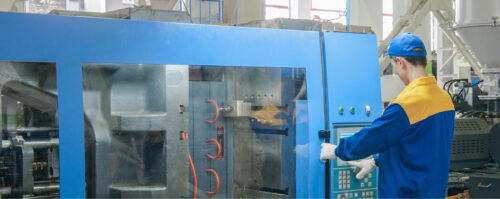
DHPP’s automatic compression molding equipment maintains precise temperature profile control throughout both the sintering and cooling cycles. This consistency is critical for filled compounds where filler distribution and matrix adhesion depend on reproducible thermal cycles.

Virgin PTFE vs. Blended Fluoropolymer Compounds
Selecting the right PTFE plastic material is about matching the compound to the failure mode you’re designing against.

Virgin PTFE
Delivers maximum chemical inertness, a very low coefficient of friction, and excellent dielectric strength. It is often used where chemical compatibility is critical and mechanical loads are moderate. However, virgin PTFE can creep under sustained compressive stress.

Filled PTFE compounds
enhance PTFE material properties such as compressive strength, wear resistance, thermal conductivity, and creep resistance. Filler selection depends on the application's operating environment and performance requirements.
Glass-Filled PTFE for Cold Flow and Wear Resistance
Glass-filled PTFE is the most widely used filled compound in compression-molded parts. Glass fiber additions, typically 15–25% by weight, significantly reduce cold flow (creep under load), improve compressive rigidity, and increase wear resistance. The effect on chemical and electrical properties is minimal at standard fill percentages.
This compound is particularly well-suited for:
- Valve seats in fluid handling systems where sustained seating loads cause creep in virgin PTFE
- Bushings and wear strips in food processing lines
- Piston rings operating in moderate-temperature hydraulic cylinders
Glass-filled PTFE is abrasive against soft mating surfaces. If the counter-surface is aluminum or another soft metal, a carbon or graphite-filled grade should be evaluated instead.
Carbon & Graphite Fillers for High-Load and Thermal Dissipation
Carbon-filled PTFE is the right choice when the application involves rubbing contact under significant load. Carbon reduces friction, improves wear life and compressive strength, and helps protect metal counterfaces in sealing applications.
Graphite-filled PTFE behaves similarly but with one key difference: its compressive strength is lower than that of carbon-filled grades. Graphite is well-suited for aluminum mating surfaces and wet environments, where carbon may present galvanic concerns.
Both fillers provide solid lubricity, an advantage in pump and valve assemblies that operate with little or no lubrication.
Bronze and Stainless Steel Blends for Extreme Compressive Strength
Bronze-filled PTFE is engineered for heavy-duty mechanical service. It offers the highest compressive strength among standard-filled PTFE compounds, along with improved thermal conductivity, lower creep, and excellent dimensional stability under fluctuating loads. This makes it a standard material for bearing applications and valve seats in steam service, where virgin PTFE’s susceptibility to cold flow relaxation under thermal cycling can lead to loss of seating force.
Bronze-filled PTFE is not recommended for corrosive media, aluminum mating surfaces, or water-exposed applications.
Stainless steel-filled PTFE takes the corrosion resistance problem off the table. It provides the compressive strength of metal-filled compounds while performing well in high-heat, steam, and food-contact applications.
Additional fillers, including molybdenum disulfide (Moly), mineral, ceramic, and pigmented PTFE formulations, are also available for specific application requirements. Contact DHPP to discuss custom compound options.
Commercial Advantages: Reducing Total Cost of Ownership (TCO)
The default approach to producing PTFE components is to machine them from rod or sheet stock. That approach works, but it carries two costs that compression molding eliminates: material scrap and secondary labor.
Eliminating Material Scrap via Net-Shape Compression Molding
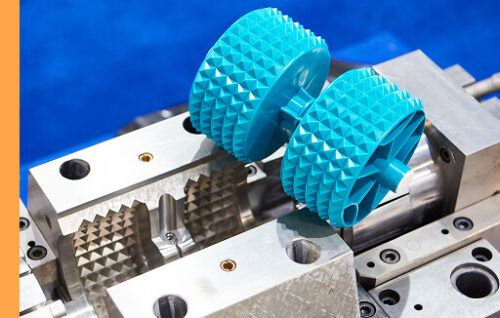
Machining PTFE from rod stock removes a significant amount of material, increasing waste and per-part cost, especially for filled compounds. Net-shape or near-net-shape compression molding minimizes material removal by producing a blank that closely matches the finished geometry.
For high-volume programs using expensive filled PTFE compounds, scrap reduction from net-shape molding is significant. It can represent a meaningful decrease in per-part material cost compared to machining from rod or sheet stock.
Minimizing Secondary Labor and Setup Costs
Compression-molded parts come out of the die at or close to finished dimensions. In many cases, only light facing or minor dimensional trimming is required, not full machining from raw stock. That reduces machine time, operator setup, and inspection steps per part. For procurement managers, that translates into a practical opportunity to reduce per-part cost without compromising specifications.
Overcoming Supply Chain Vulnerabilities with Domestic Sourcing
DHPP manufactures compression-molded PTFE components entirely at our Dover, Ohio facility. Nothing is sourced or finished overseas. For PTFE compression-molded parts used in critical sealing and bearing applications, supply disruptions can lead directly to production downtime.
DHPP’s typical lead time for custom compression-molded parts is 4–6 weeks from order confirmation to delivery, a timeline that domestic production makes possible without the uncertainty of international shipping, port delays, or minimum order requirements imposed by overseas suppliers.
We maintain full material traceability from raw PTFE resin through finished components. Every order includes lot traceability, material certifications, and dimensional inspection records for easier documentation and compliance review.
U.S. Manufacturing with Flexible Material Sourcing
All finished fabrication is completed at DHPP. Customers also have the flexibility to choose between domestically sourced and globally sourced raw materials based on their application and procurement requirements.
Our materials also meet REACH and RoHS compliance standards, with no Substances of Very High Concern (SVHC) above 0.1% by weight, and all formulations are free of conflict minerals under Dodd-Frank requirements. These compliance documents support customer qualification audits, government contract requirements, and supply chain sustainability reporting.
Specify Your PTFE Compression Molded Components With DHPP
The combination of net-shape compression molding, in-house machining and finishing, and domestic production gives procurement and engineering teams a single accountable source for PTFE and filled fluoropolymer components, with documented traceability, predictable lead times, and no offshore dependencies.
Contact Us Give Us a Call